More power for India
India aims for 100 GW of nuclear power by 2047, about ten times what it runs today. Getting there takes reactors India can build quickly, run safely and fuel with its own thorium.
Learn moreabout thorium
One Plant Three Buildings
Qark One is a single reactor of about 300 MWe. Scroll through the plant: turbine hall, reactor building and control building, each with one job.
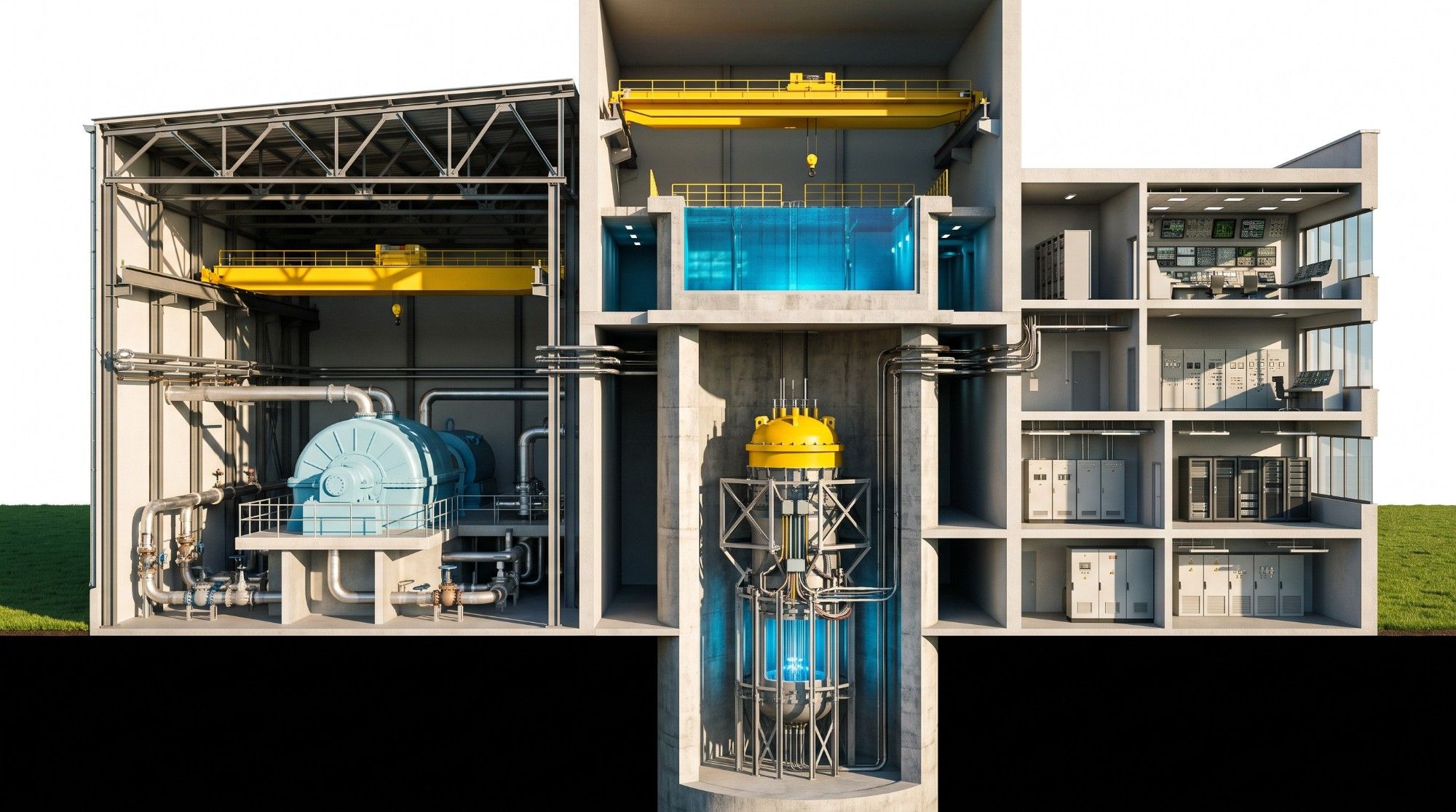
Overview
The whole plant
About 300 MWe of firm, carbon-free power from one reactor, on a compact site.
1 / 3
Turbine hall
Steam from the reactor drives a turbine-generator, the same kind of machine that runs in any thermal power station.
2 / 3
Reactor building
The reactor sits beneath a pool of about 8,000 m³ of water, held high in the building to cool the core by gravity alone.
3 / 3
Control building
Operators run the plant from a control room in its own building, beside the electrical and instrumentation systems.
Made in India
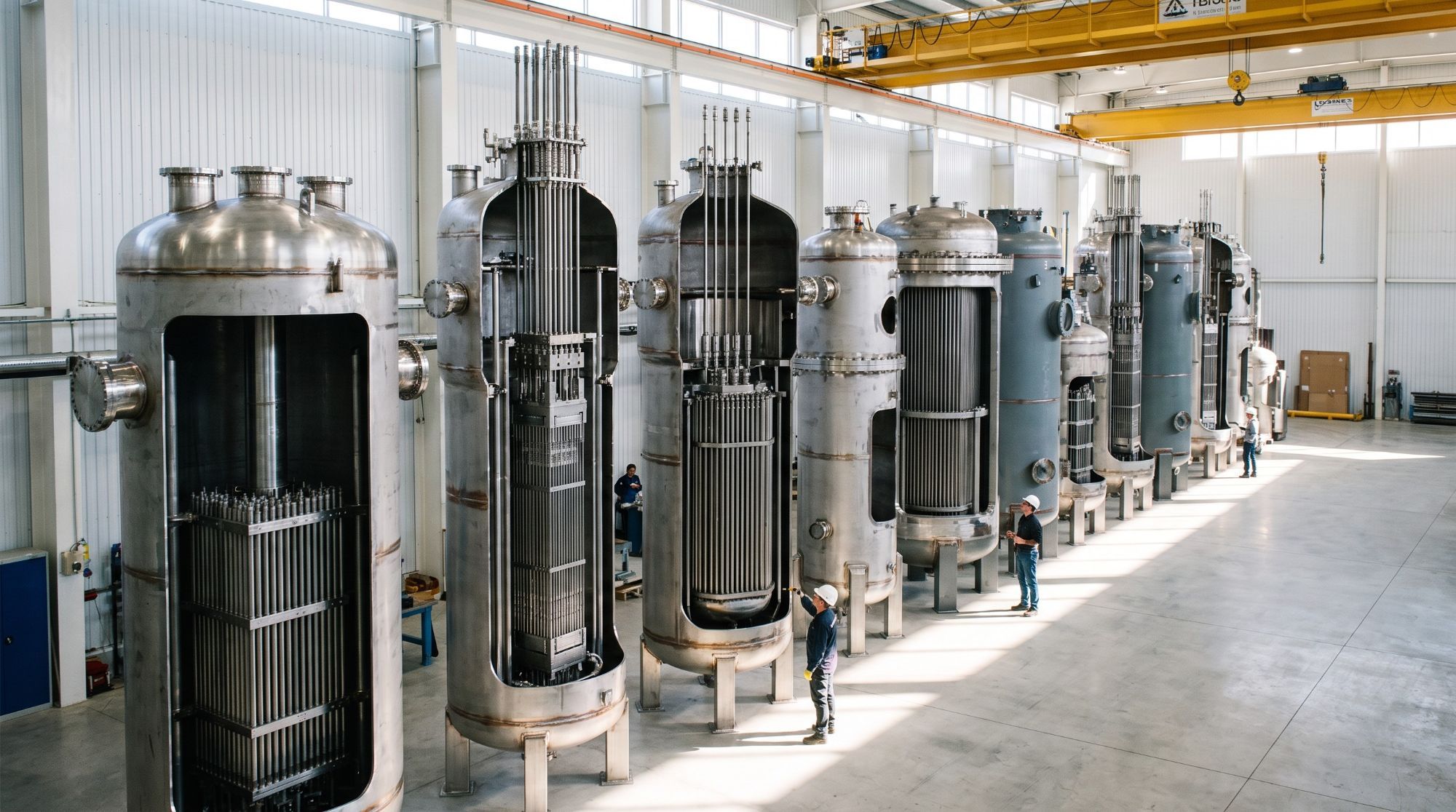
Qark One is designed around components that Indian industry can fabricate in its own workshops and deliver to site for assembly. India’s heavy-engineering firms have been making reactor components for decades.
Learn moreabout building in India
Refuelled While Running
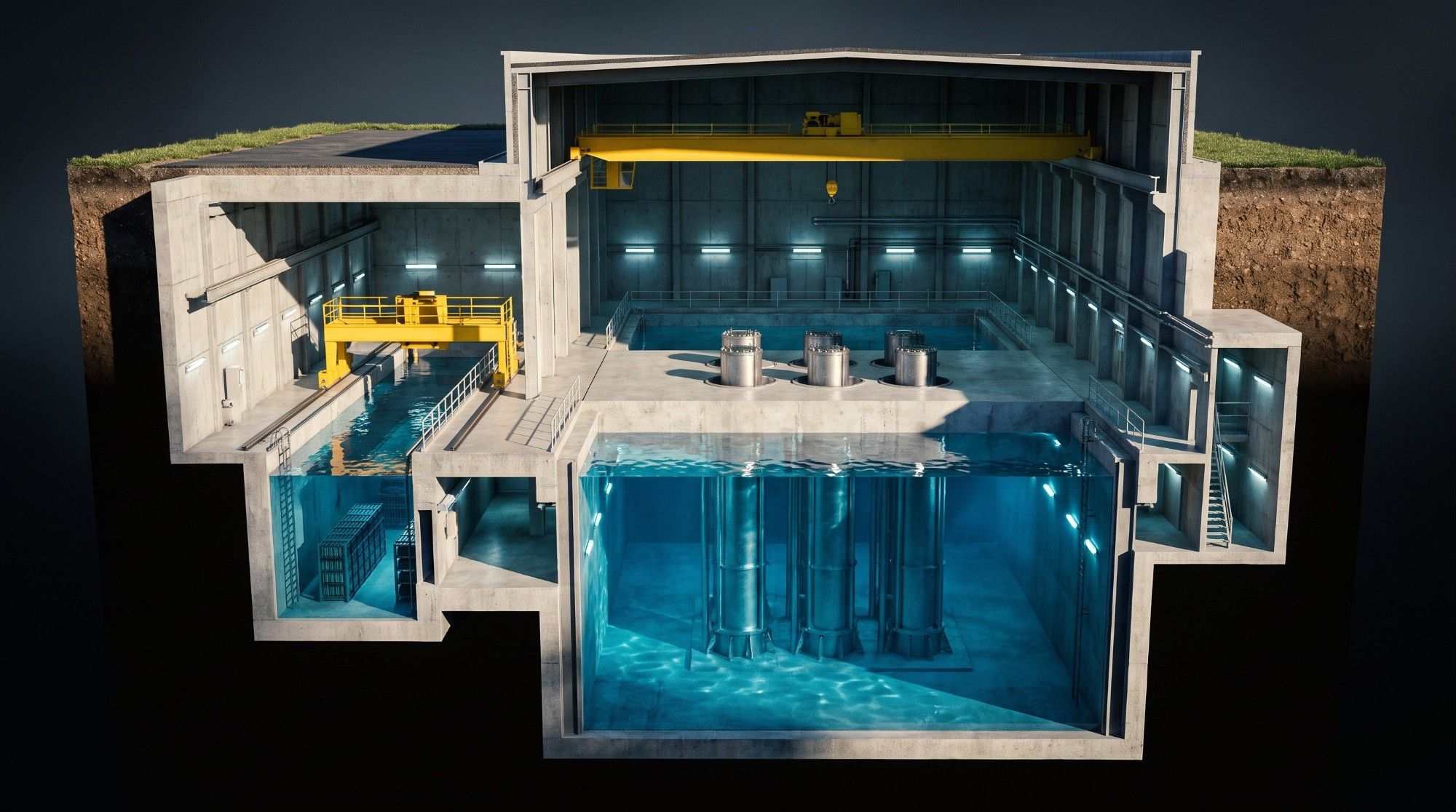
Qark One burns thorium oxide mixed with high-assay low-enriched uranium (HALEU), packed into 54-pin clusters. Fresh fuel goes in from the top while the reactor keeps running, so the plant never has to shut down just to refuel.
- Fuel
- (Th–HALEU)O₂, 54-pin clusters
- Fuel channels
- 452, vertical
- Refuelling
- On power, from the top
about Qark One
Drawn in Detail
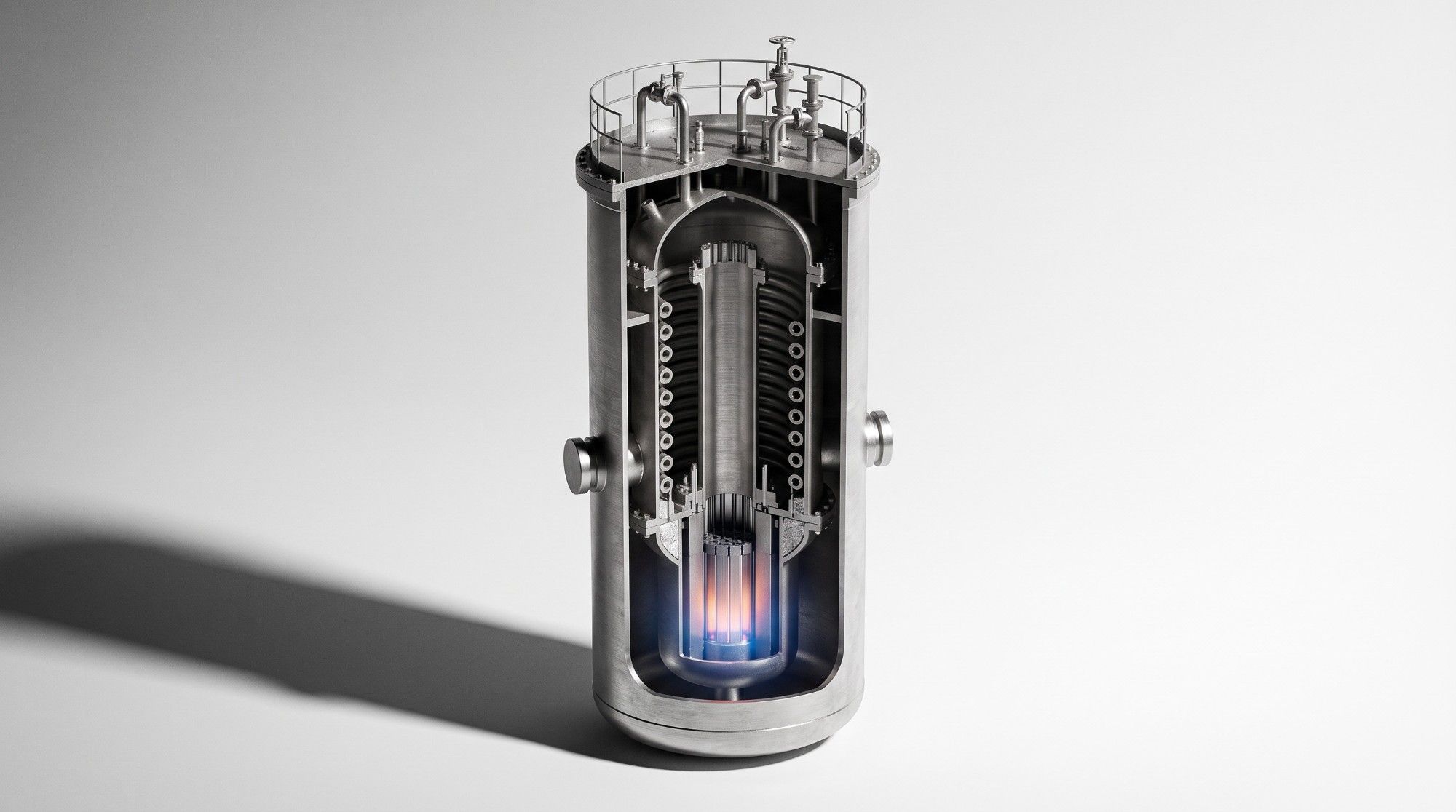
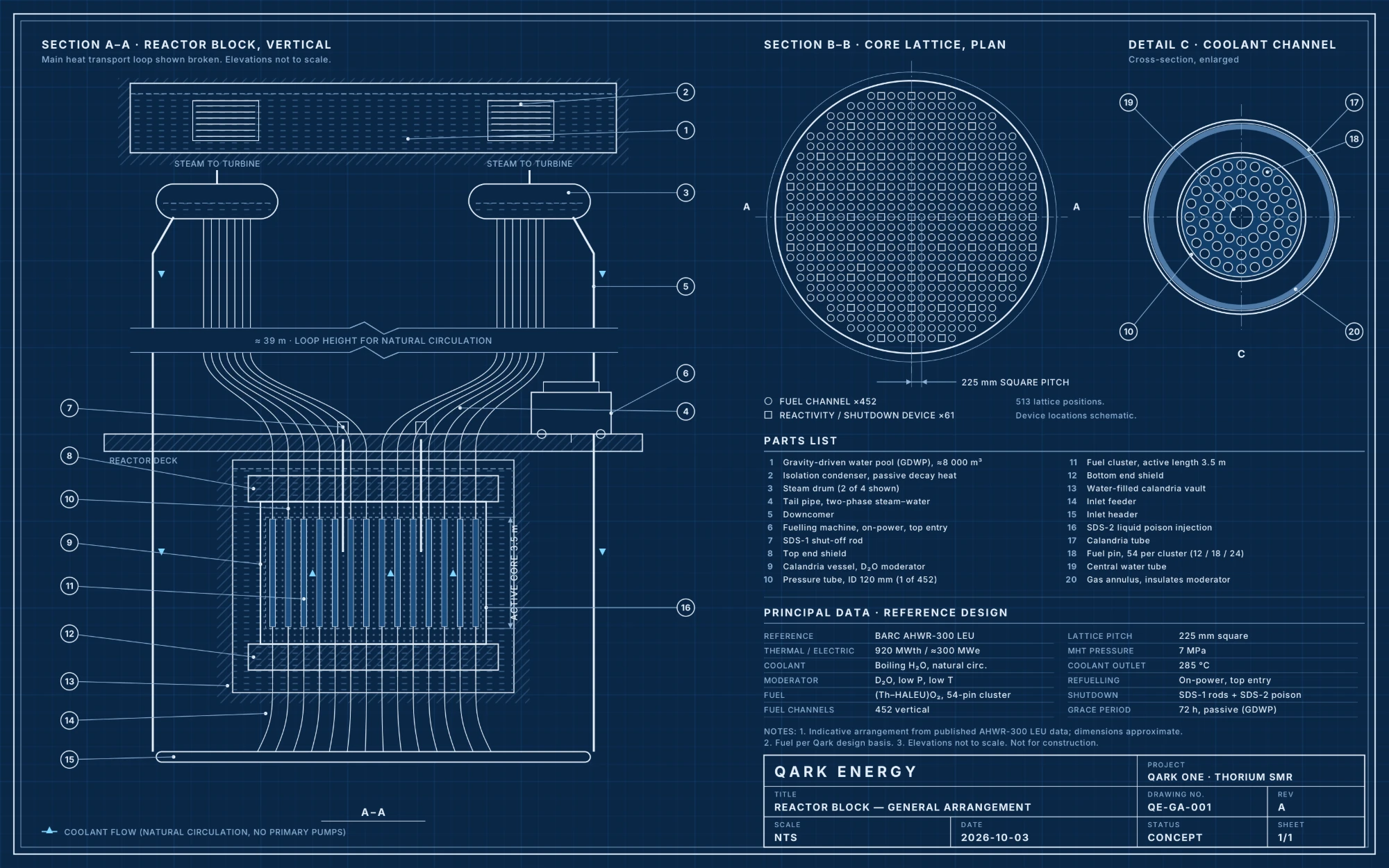
The general arrangement for Qark One, drawn from published data for the AHWR-300 LEU, the thorium reactor designed by India’s Bhabha Atomic Research Centre.
Principal data
Concept status. Indicative arrangement from published AHWR-300 LEU data; dimensions approximate, not for construction.
View thefull drawing
- Reference design
- AHWR-300 LEU (BARC, published data)
- Thermal / electric
- 920 MWth / ≈300 MWe
- Coolant
- Boiling light water, natural circulation
- Moderator
- Heavy water (D₂O), low pressure and temperature
- Fuel
- (Th–HALEU)O₂, 54-pin clusters
- Fuel channels
- 452 vertical, 225 mm square pitch
- Main heat transport
- 7 MPa, 285 °C coolant outlet
- Refuelling
- On power, top entry
- Shutdown
- SDS-1 shut-off rods, SDS-2 liquid poison
- Passive cooling
- 72 h grace period, ≈8,000 m³ gravity-driven water pool
India’s Own Fuel
India holds one of the world’s largest reserves of thorium, much of it in the monazite sands along its coast. Since the 1950s, its three-stage nuclear programme has aimed to make thorium its main fuel.

-
Stage 1
Pressurised heavy-water reactors
Natural uranium fuels India’s working fleet and produces plutonium.
-
Stage 2
Fast breeder reactors
Plutonium-fuelled reactors breed more fissile material and can turn thorium into uranium-233.
-
Stage 3
Thorium reactors
Thorium and uranium-233 become the fuel for the long term.
Qark One is designed to put thorium to work now, with HALEU as its driver fuel, rather than waiting for stage three.
Learn moreabout thorium
Work With Qark Energy
- Utilities & industry Buy power or steam Firm electricity, plus steam for industry and desalination.
- Government & partners Partner with us Engineering, manufacturing and research partners across India.
- Investors Invest in Qark One Talk to us about funding the next stage of the design.
- Engineers Join the team Reactor physics, thermal-hydraulics, mechanical design and licensing.